


Fostering Learning-Rich Clinical Environments

Enhancing Workplace Learning in Clinical Settings
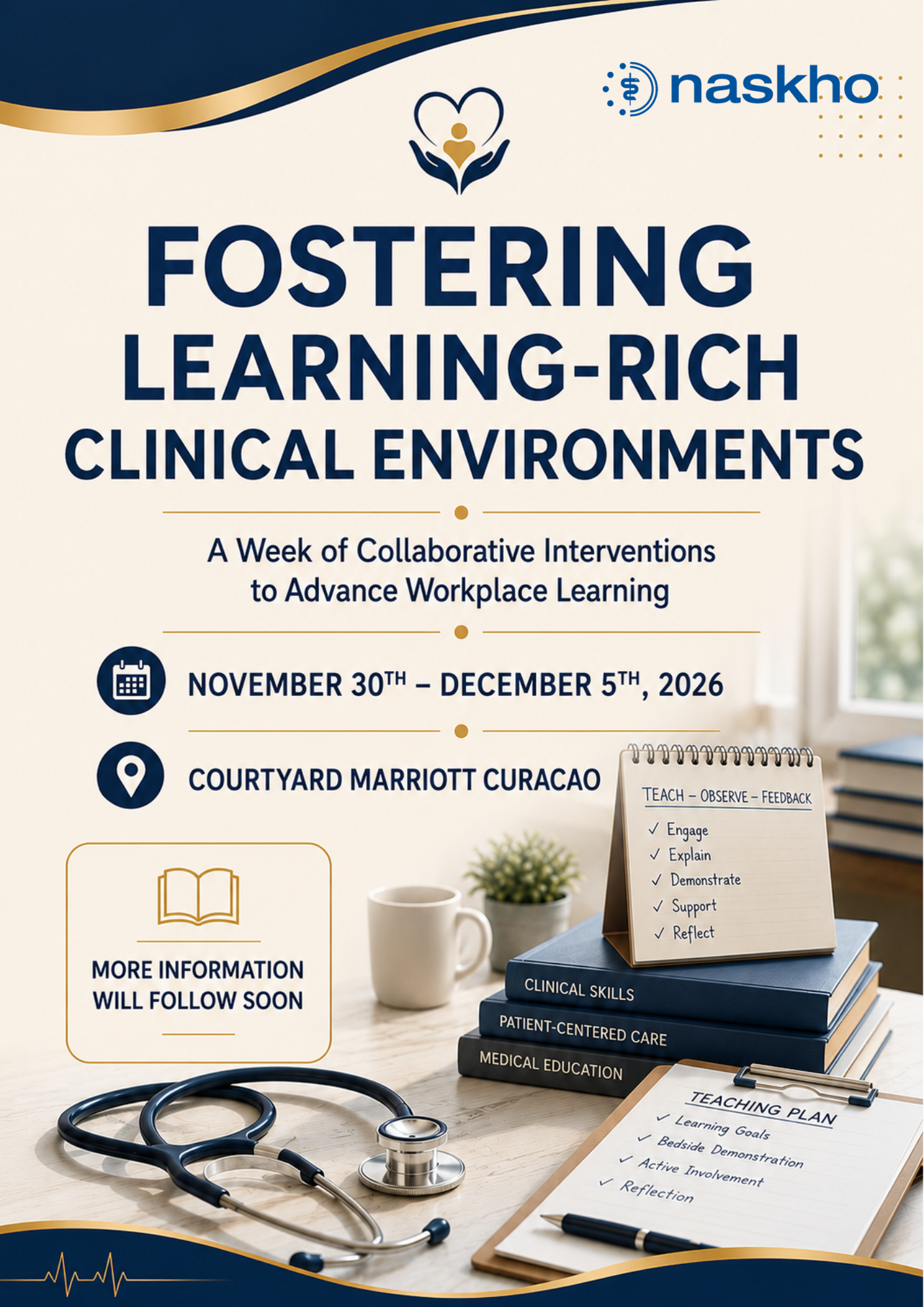
Fostering Learning-Rich Clinical Environments: A Week of Collaborative Interventions to Advance Workplace Learning
This proposal outlines a week-long initiative comprising interactive workshops and participant observations designed to strengthen workplace learning in clinical settings. The program is aimed at clinical educators, undergraduate students, residents, and interprofessional team members who contribute to shaping the hospital’s educational culture. Grounded in evidence-informed strategies from health professions education, the initiative promotes collaborative, reflective, and context-sensitive learning approaches.
Learning Goals
- Develop a shared understanding of workplace learning as a dynamic, participatory, and socially embedded process, particularly from the perspective of faculty and clinical supervisors.
- Examine and strengthen supervisory practices by exploring how guidance, observation, and structured reflection can be designed to maximize learning affordances for trainees.
- Critically reflect on power, identity, and hierarchy by engaging mixed groups of faculty, residents, and students in dialogue about psychological safety, inclusion, and exclusion in the clinical workplace.
- Identify and document barriers and enablers of psychological safety across different levels of the hospital community, creating a collective foundation for institutional improvement.
- Observe and interpret local workplace learning practices to uncover hidden challenges and untapped opportunities for interprofessional collaboration and inclusive education.
- Co-create actionable, context-sensitive strategies through collective synthesis of workshop outputs and observation insights, fostering feasible and sustainable improvements in the hospital’s learning culture.
Structure
The program is structured as a progressive and cumulative learning experience across five days. Workshops on Days 1–4 are offered to different audiences to ensure broad participation across the hospital, while Day 5 integrates all insights through participant observation and collaborative action planning.
Schedule - Week of Workplace Learning Interventions
Learning Outcomes:Day 1: Understanding Workplace Learning
Workshop:
Designing Effective Learning Spaces (Faculty & Clinical Supervisors – Group 1)
This interactive workshop engages faculty and clinical supervisors in analyzing mechanisms of participatory learning and identifying learning affordances across roles. Emphasis is placed on balancing individualized learning needs with collective performance standards and on fostering adaptable, inclusive, interprofessional environments.
Learning Outcomes:Day 2: (Un)Safety in Learning Relationships
Workshop:
Reflecting on (Un)Safety in Workplace-Based Learning (Mixed Group – Faculty/Residents/Students, Group 1)
Using the Rich Pictures method, mixed groups of faculty, supervisors, residents, and students reflect on their experiences of psychological safety and its absence in clinical learning. Through dialogue, participants surface how hierarchies, identity, and cultural norms shape inclusion and exclusion.
• Reflect critically on how power and identity shape learning relationships.
• Use Rich Pictures to unpack experiences of (un)safety.
• Identify and document barriers and enablers of psychological safety to inform institutional improvement efforts.
Day 3: Understanding Workplace Learning (Repeat Session)
Workshop:
Designing Effective Learning Spaces (Faculty & Clinical Supervisors – Group 2)
A second run of the Day 1 workshop, engaging additional faculty and supervisors to ensure wide coverage across departments. Participants generate strategies for strengthening the learning environment from the supervisory perspective.
Day 4: (Un)Safety in Learning Relationships (Repeat Session)
Workshop:
Reflecting on (Un)Safety in Workplace-Based Learning (Mixed Group – Faculty/Residents/Students, Group 2)
A second run of the Day 2 workshop, engaging a different set of mixed participants. Additional barriers and enablers of psychological safety are identified and added to the collective “Safety Map.”
Learning Outcomes:Day 5: Observing Clinical Learning Environments – From Insight to Action
Reflecting on (Un)Safety in Workplace-Based Learning (Mixed Group – Faculty/Residents/Students, Group 2)
Morning:
Structured Participant Observations
Mixed teams of faculty, residents, and students conduct structured observations of clinical placements. Observers focus on psychological safety and the educational affordances of daily practice.
Afternoon:
Collaborative Action Planning
All stakeholders convene to synthesize outputs generated during the week:
• Prototype strategies from the Understanding Workplace Learning workshops (Days 1 & 3).
• Barriers and enablers identified in the (Un)Safety in Learning Relationships workshops (Days 2 & 4).
• Insights from structured clinical observations (Day 5 morning).
Through collaborative methods, participants align on a shared understanding of the hospital’s learning culture, prioritize challenges and opportunities, and co-create feasible, sustainable action plans for educational improvement.
• Align a shared vision of the hospital’s learning culture across stakeholder groups.
• Prioritize the most pressing challenges and opportunities for workplace learning.
• Co-create feasible, context-sensitive, and sustainable strategies for educational improvement.